How to Plan, Pack, and Move with Kids: A Family Moving Guide
Moving is one of those experiences that lands differently depending on how well you’ve planned for it. With the right preparation, it’s manageable — maybe even exciting. Without it, even a short move becomes a chaotic week of misplaced boxes, stressed adults, and children who aren’t sure what’s happening or how to feel about it.
For families with kids, there’s an added layer to get right. The logistics of packing a household are straightforward enough once you know the approach. The emotional side — helping children process a transition that they didn’t initiate and may not fully understand — takes a little more intentionality. This guide covers both.
Start Earlier Than You Think You Need To
The most consistent mistake people make when moving is underestimating how long packing actually takes. A house that looks manageable on a Sunday afternoon reveals itself to be a full week’s project once you’re actually going room by room.
Start packing as early as your timeline allows — weeks ahead of the move date, not days. Begin with the things you use least: seasonal items, storage room contents, books, decorative objects, and anything that won’t be needed between now and moving day. This leaves you with a much lighter workload in the final days before the move, when you’ll also be managing logistics, cleaning, and the general chaos that comes with wrapping up one home and preparing to open another.
If you have family or friends available to help, bring them in early — not just for moving day. An extra set of hands on a weekend packing session can cut your workload in half.
Get Your Supplies Together First
Packing without the right supplies creates problems you’ll spend extra time solving. Before you start on a single box, gather everything you need:
- Boxes in multiple sizes — small boxes for heavy items like books, medium for most household goods, large for lighter bulky items like bedding and pillows
- Heavy-duty boxes for anything with significant weight — standard boxes will bow and stack poorly under the pressure
- Packing tape and a good dispenser — tape that won’t hold is the source of more mid-move disasters than almost anything else
- Bubble wrap and packing paper for anything fragile
- Markers — at least two, because one will disappear
Having everything on hand before you start means you won’t abandon a half-packed room because you ran out of tape.
Pack Smart: Boxes, Labeling, and What Goes Where
A few principles make unpacking significantly easier:
Right-size your boxes. Heavy items — books, tools, canned goods — go in small boxes. Large boxes are for lightweight but bulky items. A large box full of books is too heavy to move safely and will likely fail structurally.
Fill boxes completely. A partially filled box collapses under the weight of anything stacked on top of it. Fill gaps with packing paper, towels, or soft items rather than leaving empty space. Label every box on the side, not just the top. When boxes are stacked — which they will be — you can’t read the top. Write the destination room and a brief contents description on at least two sides of every box. Note anything fragile. The few seconds this takes per box will save significant time and frustration when you’re unloading.
Talking to Your Kids About the Move
For children, a move isn’t primarily a logistics problem — it’s an emotional one. They’re leaving the familiar: their room, their school, their friends, the specific yard they’ve played in every afternoon. How you introduce and talk about the move shapes their experience of it significantly.
Start the conversation early and keep it open. Don’t present the move as a done deal dropped on them at the last minute — give them time to process it, ask questions, and sit with the feelings that come up. It’s normal for kids to feel sad, anxious, or reluctant, and those feelings deserve space rather than dismissal.
One of the most effective tools is simple visualization. Show them photos of the new home, the neighborhood, and the city. If you’re moving to Colorado Springs, there’s a lot to work with: trails, parks, the zoo, the mountains, Pikes Peak visible from almost everywhere in the city. Helping children build a mental picture of where they’re going — and what they’ll find there — shifts the move from an abstract loss toward something with real, concrete things to look forward to.
For younger children especially, age-appropriate books about moving can open conversations that are hard to start directly. The Berenstain Bears’ Moving Day by Stan and Jan Berenstain, Where I Live by Eileen Spinelli, and Maybe Yes, Maybe No, Maybe Maybe by Susan Patron all address the emotions of relocation in ways that resonate with young readers and give parents a natural entry point for discussion.
Involve Kids in the Process
Children handle transition better when they feel like participants rather than passengers. There are several ways to bring them into the packing process that are genuinely helpful rather than performative.
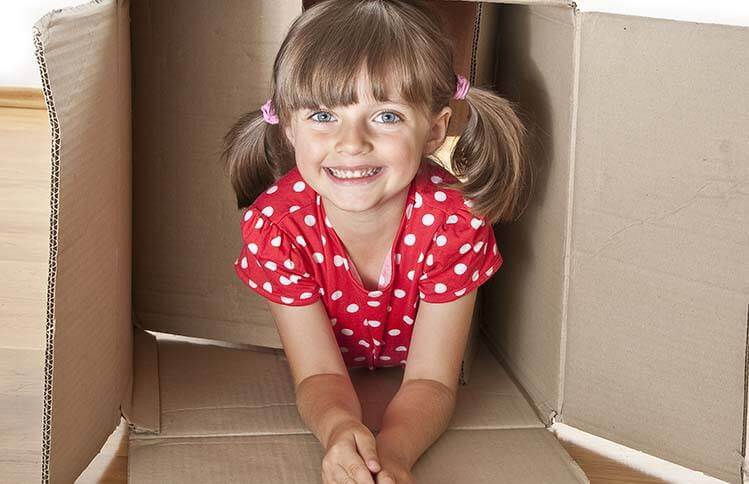
Let them label their own boxes. Give kids stickers or markers and have them create labels for their boxes — toys, clothes, books, stuffed animals. For younger children, drawing pictures on the labels works just as well as writing. This turns a task they’d otherwise feel excluded from into something they own, and it builds a small sense of agency in a situation that can otherwise feel entirely out of their control.
Let each child pack a “favorites box.” Give every child a box — or a bag — for the things that matter most to them. These boxes come with them in the car or ride separately, not buried in the moving truck, and they’re the first things unpacked at the new home. Knowing that their most important things are within reach reduces anxiety on moving day significantly. Some families add a small surprise inside the favorites box — a new book, a special snack, a note — as a welcome gift waiting in the new home.

Let Go Together
A move is also a natural opportunity to reduce what you’re carrying into the next chapter. Involve your children in the process of sorting through belongings and setting aside items to donate. Frame it as giving things to families who need them — toys a child has outgrown going to children who will love them, clothes that no longer fit finding their way to kids who can use them.
This does two things at once. It genuinely reduces what you have to pack and move, and it gives children a sense of contributing something positive in the middle of an otherwise uncertain process. For kids old enough to understand, it can be a meaningful way to mark the transition.
Say a Proper Goodbye to the Old Home
Before the moving truck pulls away, give your family time to say a real goodbye to the home you’re leaving. It sounds small, but it matters — especially for children who have significant memories attached to the space.
Walk through the rooms together. Take photos of the places that meant the most — the backyard, the bedroom with the height marks on the door frame, the kitchen where birthdays were celebrated. Have kids write a letter to the family who will live there next, sharing what they loved about the home. These rituals give the departure a sense of completion rather than just an abrupt end, and they create memories your children will carry forward.
Build Something to Look Forward to at the Other End
The goodbye matters, and so does the arrival. Give your children something specific to anticipate about moving day and the days after it.
A pizza party on move-in night is a classic for a reason — it’s easy, it doesn’t require a functional kitchen, and it turns what could be an exhausting and disorienting evening into something festive. It signals to kids that the new home is a place where good things happen, starting now.
In the days that follow, start exploring. Colorado Springs offers an exceptional quality of life for families — the Cheyenne Mountain Zoo, Garden of the Gods, the trails on Pikes Peak, and a genuinely welcoming community of people who have built lives here. The faster children start forming their own connections to the new place, the faster the new home starts to feel like home.
Welcome to Colorado Springs
At Campbell Homes, we’ve been building homes for Colorado Springs families for more than 60 years. We know that a move — especially to a new city — is one of the biggest transitions a family makes. Our communities are designed around the kind of life people want to build here: neighborhoods where kids play outside, where neighbors know each other, and where the mountains are always in view.
If you’re in the process of finding your new home in Colorado Springs, we’d love to be part of that conversation.